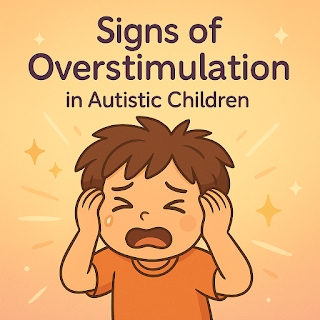
If you’ve ever looked at your child and thought,
“Okay… they’re about to explode,”
then congratulations — you’ve met overstimulation.
It happens FAST.
One minute they’re fine, the next minute they’re vibrating like a phone on full blast.
Autistic and sensory kids aren’t “being dramatic.”
Their brain is trying to process too much at once — noise, smells, lights, emotions, movements — and it becomes overwhelming.
Here’s how to spot the signs before the meltdown hits… and what you can do right there and then to help.
🌟 Signs Your Child Is Becoming Overstimulated
1. Suddenly Hyper or Silly (Not in a Fun Way)
They start running, spinning, climbing, talking faster, or acting “wild.”
This isn’t misbehaving — it’s a stress response.
2. Covering Ears, Eyes, or Hiding Their Face
A big clue that the sensory world is too loud, too bright, or too “too much.”
3. Irritable Over Small Things
A crumb on their sock = full meltdown.
The straw isn’t straight = devastation.
(It’s overstimulation, not attitude.)
4. Zoning Out or Going Silent
Not all overstimulation looks loud.
Sometimes kids shut down, stare, freeze, or disconnect.
5. More Stimming Than Usual
Flapping, pacing, humming, bouncing — stimming increases because their body is trying to self-regulate.
6. Clumsiness or Dropping Things
Overloaded brains struggle with coordination.
It’s not “being careless.”
It’s a sign.
7. Refusing to Move, Leave, or Do Simple Things
Transitions become impossible when the nervous system is overwhelmed.
💛 What to Do In the Moment (When They’re Already Overstimulated)
1. Reduce Sensory Input Immediately
Move to a quieter place
OR dim lights
OR lower noise
OR step outside
OR into the car
OR cuddle corner
Less input = calmer child.
2. Keep Your Voice Soft and Slow
Your energy becomes their energy.
Use simple phrases like:
“Safe.”
“I’m here.”
“Slow breaths.”
“You’re okay.”
3. Deep Pressure Works Wonders
Try:
- A big squeeze
- Weighted blanket
- Compression vest
- Firm back rub
- Laying over the lap pillow
This helps the nervous system switch from chaos → calm.
4. Offer a ‘Reset Tool’
Things that help instantly:
- Sensory bottle
- Chewy
- Fidget
- Ear defenders
- Blanket hood
- Cold drink
- Bubbles
- Deep breaths together
If you need ready-made visual tools, sensory calm cards, or meltdown supports, I’ve put some together in my Etsy shop. They’re designed especially for autistic and sensory kids (and tired mums like me!).
5. Don’t Talk Too Much
During overstimulation, talking can make it worse.
Keep it simple, gentle, minimal.
6. Validate Their Feelings
Say:
“That was a lot.”
“You’re safe.”
“We’re going slow now.”
“I know your body feels busy.”
This lowers shame and panic.
🌈 How to Prevent Overstimulation Before It Hits
- Build in quiet breaks during busy outings
- Offer sensory snacks throughout the day
- Keep routines predictable
- Use visual schedules or timers
- Limit long shops, loud events, or chaotic spaces
- Create a calm corner at home
- Let them stim freely!
Overstimulation is NOT bad behaviour.
It’s a nervous system doing its best with too much input.
With the right tools, you can spot the signs early and help your child regulate before overwhelm takes over.
You’re doing amazing. Truly.
Check out: