
If you’re a parent of an autistic or sensory-seeking child, you’ve probably seen stimming a million times… even if you didn’t know that’s what it was.
The flapping.
The spinning.
The humming.
The pacing.
The “I MUST TOUCH THIS ONE SPECIFIC THING NOW OR I WILL COMBUST.”
Yep — stims.
And guess what?
They’re completely normal. Helpful, even.
Let’s break it down in the simplest, most mum-to-mum way possible.
💛 What Is Stimming?
“Stimming” is short for self-stimulating behaviour.
Kids (and adults!) do it to:
-
regulate their emotions
-
manage overwhelm
-
feel calmer
-
get sensory input
-
stay focused
-
or just because it feels nice
EVERYONE stims — biting nails, tapping feet, twirling hair…
But autistic and sensory-seeking kids stim more intensely and more visibly.
💜 Why Do Autistic Children Stim? (The Real Reason)
If you Google it, you’ll get ten paragraphs of boring science.
Here’s the REAL answer:
👉 Their brain is trying to keep them comfortable, safe and regulated.
That’s it.
Stims help with:
-
too much noise
-
too much chaos
-
excitement
-
frustration
-
boredom
-
overwhelm
-
transitions
-
anxiety
-
happiness
-
sensory overload
Basically:
Stimming is regulation.
Not “bad behaviour”.
Not “naughty”.
Not “attention-seeking”.
Just their body doing what it needs to do.
🌟 21 Common Stims (That Parents See Every Day)
Here are the most common stims you’ll see in autistic + sensory kids — explained simply and without judgement.
1. Hand flapping
Pure excitement or sensory release.
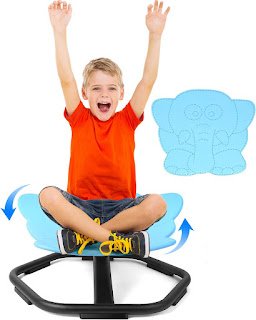
2. Spinning in circles
Helps reset the vestibular system (the balance part of the brain).
3. Rocking back and forth
Self-soothing. A big one before sleep.
4. Jumping / bouncing
Regulation through heavy movement.
(Isaac’s favourite bedtime sport 😂)
5. Watching spinning objects
Fans, wheels, fidget spinners — VERY calming.
6. Humming or vocalising
Helps block out overwhelming noise.
7. Chewing
A sensory craving for deep oral input.
(Chew necklaces are gold for this.)
8. Repeating words or phrases (echolalia)
Helps process information and emotions.
9. Tapping or drumming
Rhythm = regulation.
10. Pacing
Burns off nervous energy.
11. Staring at lights or sparkles
Visual stimulation: calming + mesmerising.
12. Hair twirling or pulling
A way to process sensory overload.
13. Sniffing objects
Finding comfort through familiar scents.
14. Sorting or lining up items
Creates control + predictability.
15. Rubbing fabric / textures
Calming tactile input.
16. Clicking pens or buttons repeatedly
The dopamine hit is REAL.
17. Scrunching toes or hands
Regulation you don’t even notice happening.
18. Spinning objects in hands
Portable sensory joy.
19. Flicking fingers in front of eyes
A visual stim when overwhelmed or excited.
20. Repetitive jumping on furniture
Yep. The trampoline is your house now.
21. Repeating movements (running back and forth)
A way to regulate energy and focus.
🧡 When Should You Worry About Stimming?
Honestly?
Rarely.
You only need to step in if:
-
it’s causing injury
-
it’s hurting someone else
-
it’s stopping them doing essential daily tasks
-
it’s coming from severe distress
-
they’re stimming because they’re overwhelmed and need support
Otherwise…
Let them stim.
It’s not just okay — it’s healthy.
💜 How to Support Your Child’s Stimming
Here are gentle, sensory-friendly ways to help:
✔ Provide safe stims
Chewelry, fidgets, weighted toys, wobble cushions, beanbags.
✔ Add more movement
Trampoline, hopping balls, sensory swings.
✔ Create a calm space
Low lights, squishies, pillows, your Calm Corner posters.
✔ Give them breaks
Movement breaks. Sensory snacks. Regulation time.
✔ Learn their “happy stims” vs “overwhelm stims”
Both are valid — they just mean different things.
🎁 Helpful Tools We Use at Home
Perfect spot for your products:
-
Books!! These ones are designed for those little busy brains!
🌙 Final Thoughts
Stimming isn’t something to “fix”.
It’s something to understand.
It’s your child communicating what their body needs — and when we honour that, everything becomes easier:
Their regulation.
Your routines.
Your connection.
You’re doing amazing.
And your sensory kid’s brain?
Brilliant, bouncy, and beautifully wired — just like it should be. 💜